Bug Bites 101: When to Treat at Home and When to Visit Urgent Care
Bug Bites 101: When to Treat at Home and When to Visit Urgent Care
Summer in the South means more time outdoors backyard BBQs, fishing, hiking, and unfortunately… more bug bites (and the occasional bite from something bigger).
Mosquitoes, fire ants, ticks, bees, and wasps are all part of the season. While most bites are harmless, some can turn into something more serious. Knowing the difference can help you stay safe and avoid complications.
At Healthcare Express Urgent Care, we want you to enjoy the outdoors but also know when it’s time to get checked out.
Most Bug Bites Can Be Treated at Home
Not every bite or sting needs medical attention. Many mild reactions can be treated at home with:
- Antihistamines like Benadryl (for itching)
- Hydrocortisone cream
- Cold compresses
- Keeping the area clean and avoiding scratching
Fire ant bites, for example, often appear as small, itchy bumps that may form tiny blisters and typically improve within a few days.
When to Visit Urgent Care for a Bite or Sting
Sometimes, a bite needs more than at-home care. Visit urgent care if you notice:
- Redness or swelling that is getting worse
- A bite that isn’t improving after a few days
- Signs of infection (warmth, pus, increasing pain)
Tick Bites: What to Watch For
Tick bites are often painless at first, but symptoms can develop later. Watch for:
- A rash (especially a bullseye pattern)
- Fever or chills
- Fatigue
- Numbness or weakness
If you experience any of these symptoms after a tick bite, it’s important to be evaluated.
Bee, Wasp, and Hornet Stings
Stings can cause more intense reactions. Seek medical attention if you experience:
- Spreading redness or swelling
- Hives or a widespread reaction
- Dizziness or throat tightness
Call emergency services immediately if you have trouble breathing or signs of a severe allergic reaction.
Fire Ant Bites: Common but Irritating
Fire ants are a common problem in the South. Their bites can be painful and often turn into itchy, pimple-like bumps.
While most improve on their own, you should seek care if:
- The area becomes increasingly red or swollen
- The bites look infected
- Symptoms are not improving
Animal Bites: When to Take Them Seriously
Animal bites such as from dogs, cats, or other animals are different from bug bites and should always be taken seriously.
These bites often cause:
- Immediate pain, throbbing, or swelling
- Broken skin or puncture wounds
- Increased risk of infection
You should seek medical care if:
- The bite breaks the skin
- There is redness, swelling, or drainage
- You’re unsure about rabies risk or vaccination status
- Pain or swelling is worsening
Animal bites may require cleaning, antibiotics, or further evaluation to prevent infection.
Prevention Tips to Avoid Bites
A few simple steps can help reduce your risk:
- Use insect repellent when outdoors
- Wear protective clothing in grassy or wooded areas
- Check for ticks after spending time outside
- Avoid ant hills and insect nests
- Supervise children and avoid unfamiliar animals
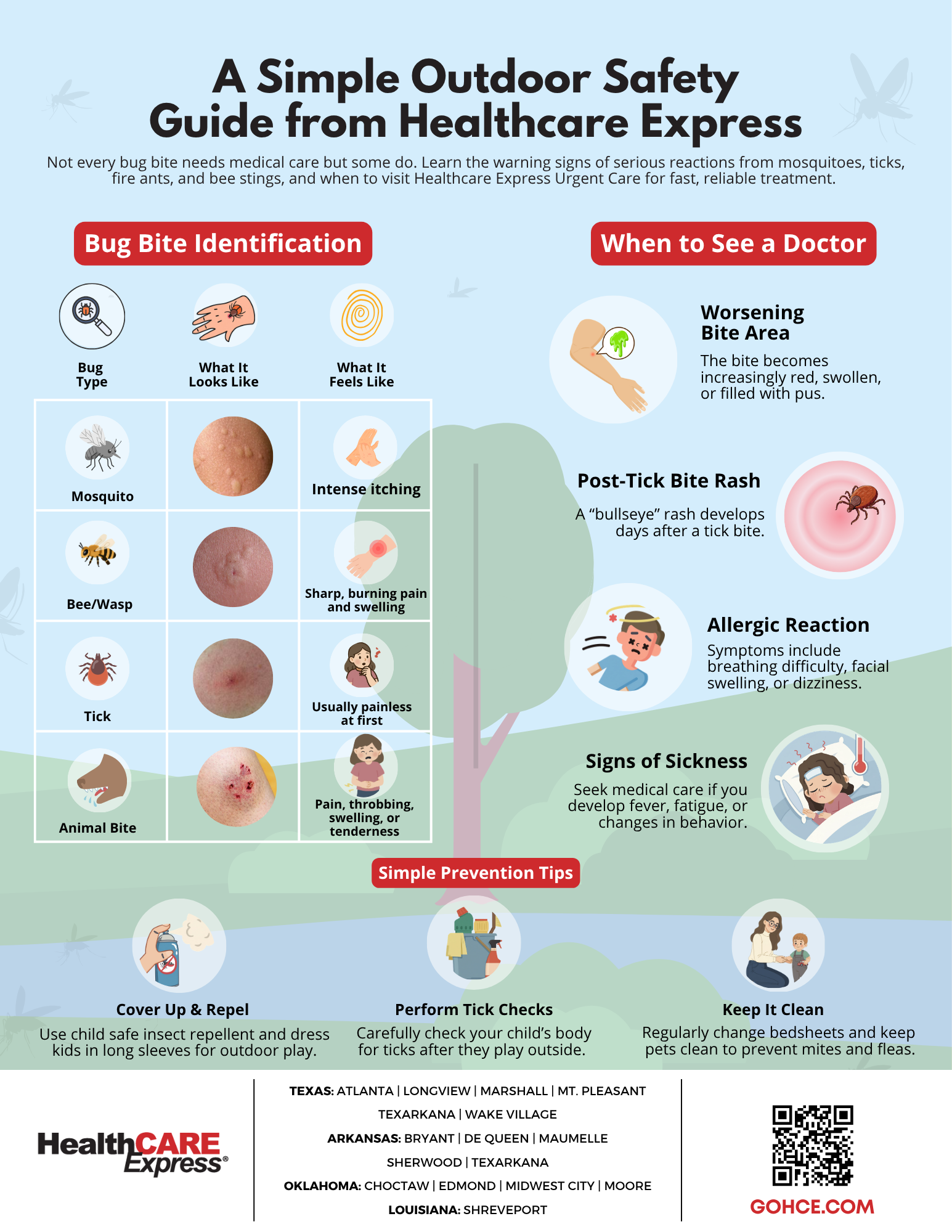
For a quick reference, our bite and sting guide can help you identify symptoms and decide when medical care is needed. (Download Here)
When in Doubt, Get Checked Out
Bites and stings can go from mild to concerning quickly—and you don’t have to guess.
At Healthcare Express Urgent Care, we’re here to help you understand what’s normal, what’s not, and when treatment is needed.
✔ Walk in anytime
✔ Book online or start a virtual visit at gohce.com
✔ Get care without the confusion